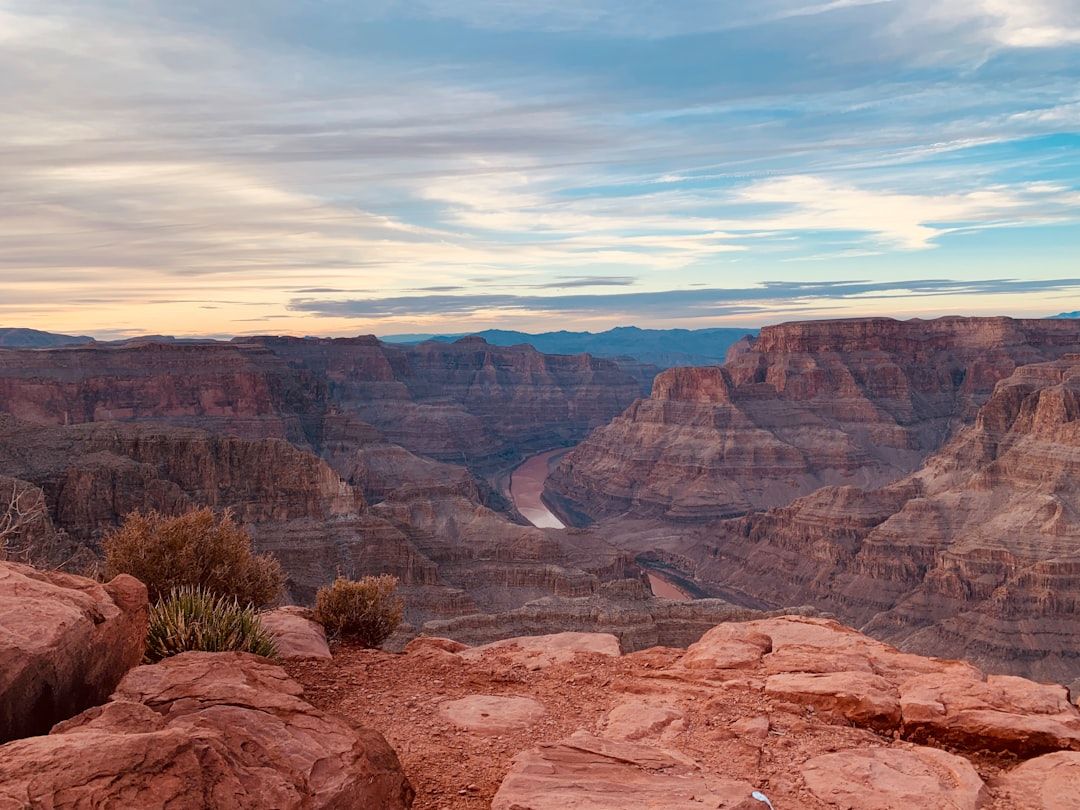
The Grand Canyon inverts the normal shape of a hike. You go down while fresh and climb out tired, in heat that increases as you descend. Almost every rescue is a version of that mistake.
The rule
The climb out takes roughly twice as long as the descent.
Turn around when you have used one third of your energy and water, not half.
It also gets hotter as you go down — the inner canyon can exceed 43°C when the rim is pleasant, which is what catches people out.
Do not attempt the river and back in a day. The park actively advises against it and it is the scenario behind most heat emergencies.
The corridor trails
Bright Angel — the main South Rim trail, with water at rest houses seasonally, shade in places, and a steady grade. The standard descent and the standard ascent.
South Kaibab — a ridge trail, more dramatic, no water at all, and no shade. Better for descending than climbing.
The classic pairing is down South Kaibab, up Bright Angel.
North Kaibab from the North Rim, longer, descending through more vegetation.
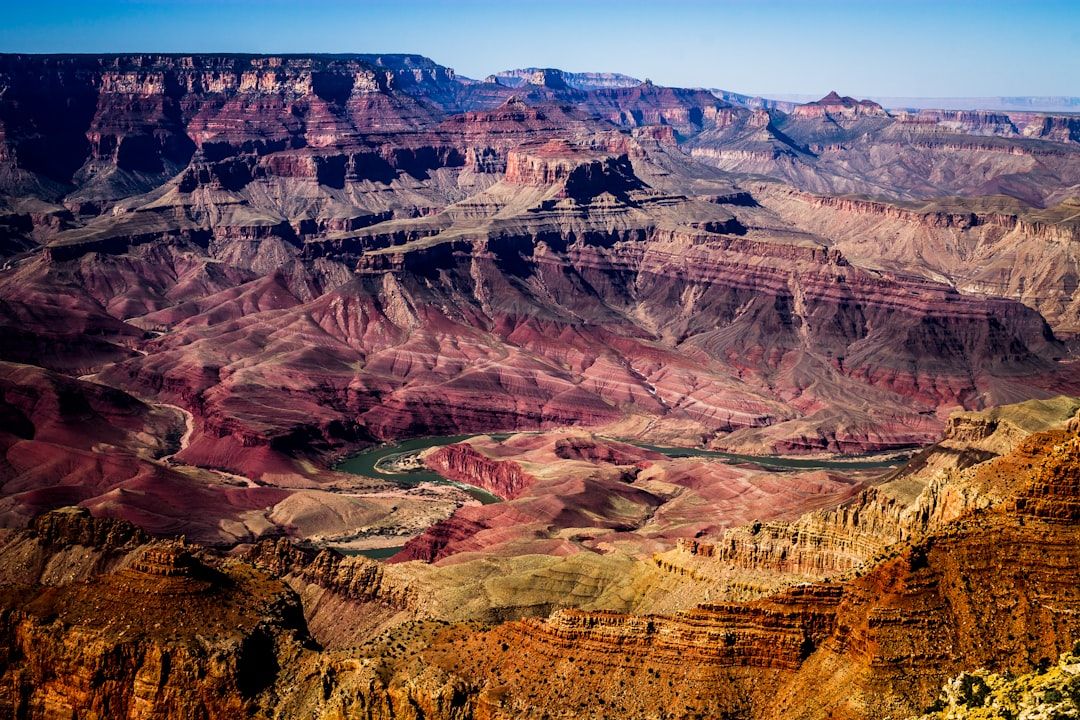
Day hikes that work
Ooh Aah Point on South Kaibab — 1.5 km down, a large view, and a manageable climb back.
Cedar Ridge, a little further.
Bright Angel to the 1.5 or 3-mile rest house, with water in season.
Plateau Point, a long day and the furthest sensible day-hike target.
The Rim Trail, paved in sections, flat, with shuttle stops — and the best value in the park for anyone not descending.
Overnight and rim-to-rim
Any overnight below the rim requires a backcountry permit, issued by lottery well in advance and competitive.
Phantom Ranch — dormitory and cabin places at the bottom — is allocated by a separate monthly lottery.
Rim to rim is roughly 34 km with about 1,700 metres of ascent on the far side. Done as a two- or three-day trip with a permit, or as a single day by very fit and experienced hikers, which the park does not encourage.
The shuttle between rims takes about four and a half hours by road, since the rims are 16 km apart across the canyon and 350 km apart by car.
North Rim versus South Rim
| South Rim | North Rim | |
|---|---|---|
| Open | Year round | Roughly mid-May to mid-Oct |
| Elevation | ~2,100 m | ~2,400 m |
| Visitors | The great majority | A fraction |
| Character | Facilities, shuttles, viewpoints | Forested, cooler, quiet |
Heat rules
Avoid hiking between 10am and 4pm in summer below the rim.
Carry more water than you think, and salty food with it — drinking large amounts of water without replacing electrolytes causes hyponatremia, which presents like heat exhaustion and is treated differently.
Check which water stations are running. Pipeline breaks happen and stations go dry.
Practical
Spring and autumn are the seasons for hiking below the rim.
Mules have right of way — stand on the inside of the trail and follow the wrangler's instructions.
The South Rim shuttle covers the viewpoints and trailheads and is included with entry.