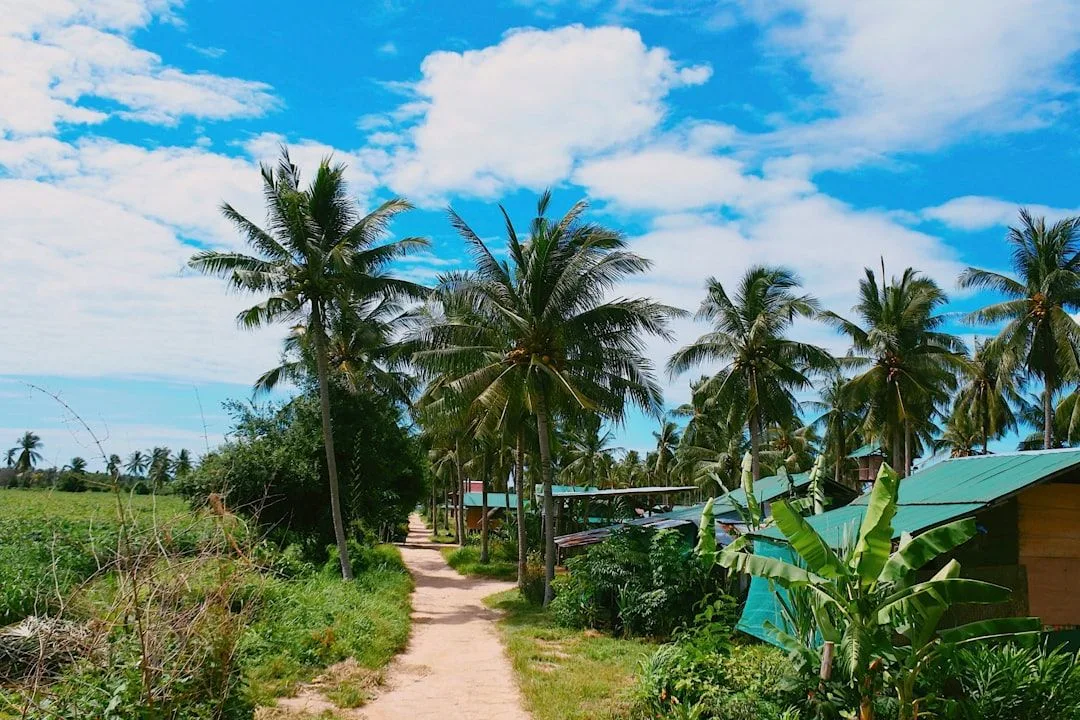
Thailand's hiking is jungle rather than mountain, and jungle walking is a different skill with different hazards. Distance means very little; heat, humidity and vegetation set the pace.
What jungle walking is like
Slow. Heat and humidity cut pace dramatically, and a five-kilometre jungle route can take as long as fifteen kilometres of mountain trail.
Leeches in the wet season. Harmless, unpleasant, and they get through sock tops — leech socks or tucked trousers help, and salt or a fingernail removes them. Do not burn them off.
Losing the trail is the real navigational hazard. Jungle paths grow over within weeks and there is no long view to orient by.
Dehydration is the realistic danger on any long day, and you sweat far more than you notice.
Snakes exist and bites are rare. Making noise and watching where you put your hands covers most of it.
The national parks
Khao Yai — Thailand's oldest, three hours from Bangkok. Waterfalls, grasslands, gibbons, hornbills and wild elephants.
Several trails require a guide beyond the main marked network, which is a sensible rule rather than a revenue one.
Khao Sok, in the south — rainforest older than the Amazon, with Cheow Lan lake and its limestone karsts, floating bungalows, and jungle walking from them.
Doi Inthanon, near Chiang Mai — Thailand's highest point at 2,565 metres, cool at the top, with the Kew Mae Pan nature trail requiring a local guide and short walks around the summit.
Erawan, in Kanchanaburi — seven tiers of waterfall with a path linking them, and swimming at several levels.
Doi Luang Chiang Dao — a limestone massif north of Chiang Mai, with a permit system and a genuine overnight climb.
Northern trekking
The multi-day treks around Chiang Mai, Chiang Rai and Mae Hong Son, typically two or three days with village stays.
The ethics vary enormously by operator.
Trips run in partnership with communities, where people are paid properly and set the terms, are a different thing from those where villages are presented as a spectacle to walk through.
The meaningful questions: who owns the operation, who guides it, and where the money goes. Operators who cannot answer clearly are answering.
Note also that some so-called long-neck village visits involve displaced people in arrangements that are widely criticised — this is worth reading about before booking.
Elephants, briefly
No riding. No performances. Be sceptical of bathing, which has become a marketing term rather than an ethical standard.
Genuine sanctuaries observe from a distance, state their rescue history and cap numbers.
Season
| Period | Conditions |
|---|---|
| Nov–Feb | Cool and dry — the season |
| Mar–May | Hot; northern burning season affects air quality |
| Jun–Oct | Wet; leeches, mud, some trails closed |
Burning season in the north, roughly February to April, can make air quality in Chiang Mai genuinely poor. Check forecasts before booking spring trekking there.
Practical
Book locally, the day before, for roughly half the online price.
Long sleeves and trousers despite the heat — sun, insects and vegetation.
Far more water than a mountain day would need, plus a way to treat more.
Quick-drying everything, since nothing dries overnight in humidity.